
Abstract Chain - Onboarding the next generation of crypto users.
A deep dive into Abstract Chain.
Crypto needs to become more user-friendly. Having to use multiple wallets, bridging funds, and set transaction fees is pretty annoying. In crypto we got used to this. Imagine explaining this to your grandmother. The level of friction is a no-go in every other space. AI got adapted by everyone when we made it accessible through human language. But still, in crypto, there is friction everywhere. Even for me as a developer, it is annoying to use in some cases. Probably one of the reasons crypto struggles to onboard the next cohort of users into the ecosystem - the people that are not tech savvy or willing to learn all this stuff.
A project that wants to tackle exactly this is Abstract. Founded by some of the brains behind PudgyPenguins, one of the biggest NFT collections ever, they aim to put the user in the center of their focus and call it “Consumer Crypto”. Let’s see what’s behind that.
What’s covered in this article?
Project Overview
Abstracts Technology
Roadmap and Vision
Competitive Landscape
The Team
Community and Ecosystem
Abstract Token
Conclusion
Project Overview
When one of the founders, Luca, got asked which company inspires him most in his marketing, he answered Apple. IBM was building computers long before them, but Apple made them consumer friendly. The same goal, Abstract is following in the crypto space. Abstracts wants to put the user in the focus of their project and the key question they try to answer is how to make it as frictionless as possible to onboard new users. Basically a consumer-first approach, whereas many other crypto startups are following a technology/developer first approach.
Abstract is an Ethereum Layer 2 blockchain, developed by Igloo Inc and released in January 2025. Especially in the beginning, the founders said in an interview, the focus is on fun as it has the most viral potential. The founding team defined it as “Phase 1: Discretionary spending” and this is the phase to onboard the first 50 million users. As said, focus is one fun which includes Gaming, Socials, Trading, Casinos, Betting, Digital Collectibles and Tokenized Culture.
At the core of Abstract are four pillars:
Community & Culture: Abstract builds on Igloo Inc’s legacy, emphasizing strong community ties and cultural relevance at its core.
Familiar Onboarding: It leverages account abstraction and advanced wallet security for seamless, Web2-like user experiences.
App Discoverability: Abstract offers a platform that improves ecosystem curation, ensuring a cohesive and intuitive user journey.
Secure & Scalable: Built on Ethereum with ZK cryptography and Eigen DA, Abstract is secure, scalable, and fully EVM-compatible.
Abstract Global Wallet
At the heart of interacting with Abstract is the Global Wallet. This wallet uses special smart contract technology, so you only have to sign up once to use any app on Abstract. You can sign up with email, social logins, or passkeys. This makes exploring Abstract apps really easy to use, without the need for extra accounts or following extra sophisticated steps.
Portal
The Abstract Portal is the main point of entry into the Abstract ecosystem. It spotlights trending apps, the most viewed livestreams on their streaming application, and acts as navigation for the whole user experience. The livestream and the discovery feature could also play a major role in the business model of Abstract as they are pretty easy to monetize. Imagine it like a decentralized Google Play Store and Twitch.
XP and Badges
Users and creators on Abstract Mainnet earn XP by using apps, streaming, or making content. XP updates every Monday based on what you did last week. There are three kinds of badges: flash, weekly, and secret. Builders get monthly awards in three levels based on their app’s success.
Technology & Architecture
Even with a big focus on the user, the technology doesn’t come to short. Abstract brings some components together that make it unique. Of course, always with the user experience in mind. Below are some main tech features of Abstract.
ZK Rollup
Abstract is a ZK Rollup Layer 2 built with zkSync’s ZK stack and EigenDA on Ethereum. This means that Abstracts L2 posts batches of transactions to Ethereum using zero-knowledge proofs to confirm the correctness of the state transitions in the batch without having to re-execute the transactions on Ethereum. The ZK stack that they use for this is an open-source framework to deploy interoperable ZK-powered blockchains.
Native Account Abstraction
Abstract uses Native Account Abstraction. This means that all accounts are essentially smart contract accounts which enables a more user-friendly experience by offering lost-key recovery, spending limits, session keys, flexible gas payments, transaction batching, and alternative signature methods.
Panoramic Governance
Panoramic Governance (PG) is all about letting users vote on big decisions and earn rewards at the same time. Here’s a quick breakdown:
Earn While Voting: PG pays you for shaping the future of Abstract. You vote for the best ideas, and if those ideas succeed, everyone benefits.
Why It Matters: In many L2 ecosystems, the chain makes money from gas fees, while apps and users don’t see a direct share of that revenue. PG fixes this by sharing rewards with the apps that bring in users and the people who actually use them.
How It Works:
Apps Get a Share: If an app brings value and activity, it earns part of the revenue from the chain.
Users Benefit Too: You’re not just paying fees; you can also get rewards when the chain grows.
Active Participation Threshold (APT): Users must actually use the chain (like making transactions) to earn rewards. This stops people from trying to cheat by doing nothing.
By linking revenue to real users and apps and sharing it with them, PG aims to create a fair and healthy environment that includes users and builders.
Transaction Lifecycle
How is Abstract sending its activities to the Ethereum Mainnet?
Below is a quick look at each step of the transaction lifecycle of an Abstract transaction:
Abstract (Processed): The transaction runs on Abstract, and the user gets a quick result showing if it succeeded or failed. The sequencer then forwards the block to the prover and groups transactions from several blocks into a batch.
Ethereum (Sending): Multiple batches are sent to Ethereum in a single transaction. The sequencer commits these batches to the L1 rollup contract, storing them as data blobs (following EIP-4844).
Ethereum (Validating): A ZK proof is generated off-chain by a prover and sent to the L1 rollup contract. The verifier (on-chain) checks the proof to confirm that the batches are correct.
Ethereum (Executing): After the proof is verified, the state is finalized. The Merkle tree with L2 logs is saved on Ethereum by calling the executeBatches function on the L1 rollup contract.
This flow makes Abstract more secure, since final confirmation happens on Ethereum and uses the power of ZK proofs to verify each step.
In an interview, Luca said that as soon as there are some nice technological innovations, they can implement them in their product. They don’t need to be the first to invent it. The focus in terms of invention still seems more on the user-facing side, which is a smart view in my opinion.
Roadmap & Vision
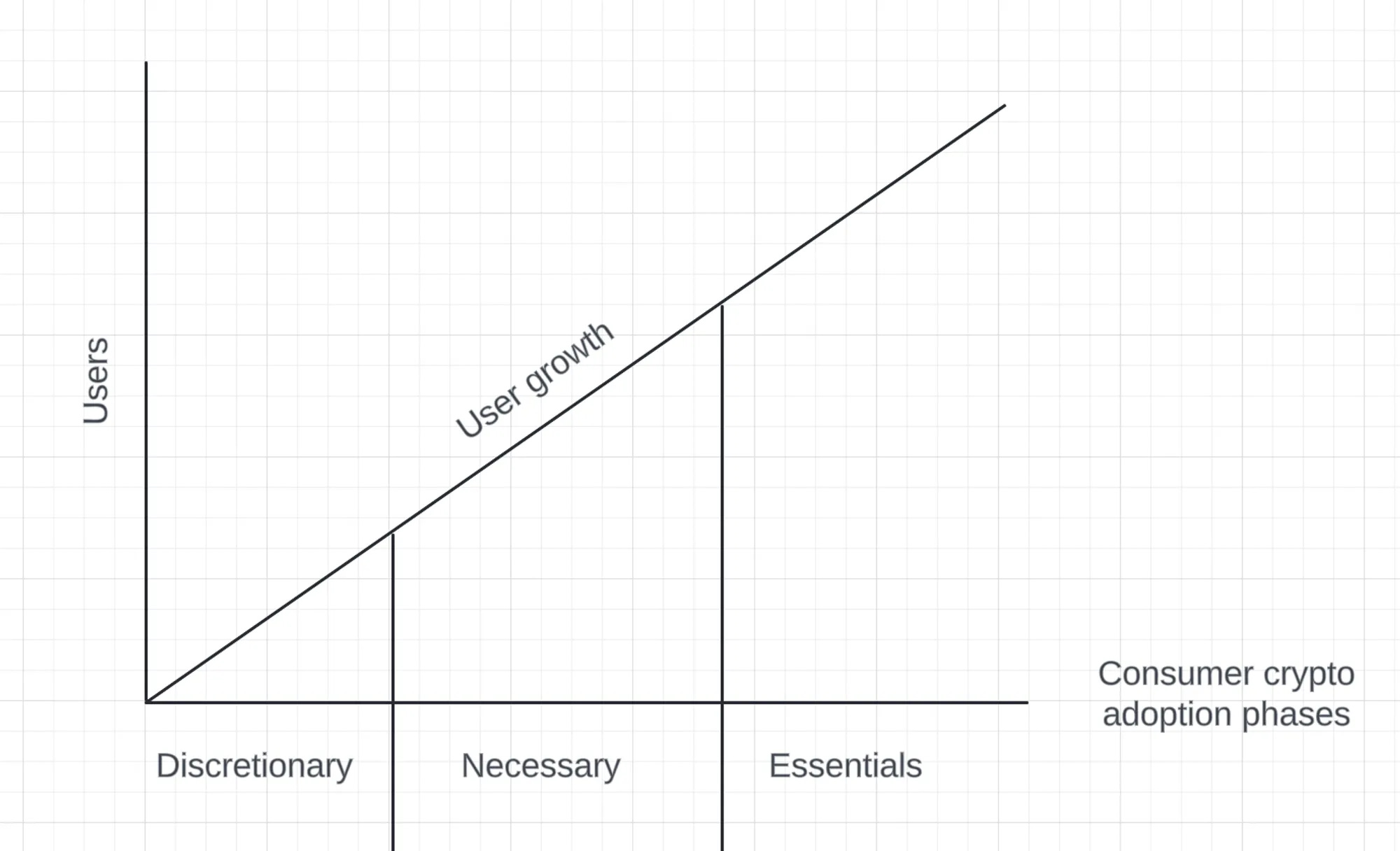
Even if I couldn’t find an official roadmap by Abstract, there is an article written by one of the founders (Luca Netz) that describes the vision of consumer crypto and how they are planning to onboard users. The process is structured in 3 phases:
Phase 1: Discretionary spending (already mentioned)
Phase 2: Necessary spending
Phase 3: Essential spending
Phase 1
In phase 1, he describes that the first wave of consumer crypto will focus on fun, leisure, and “discretionary spending.” He claims these apps are easier to market, can go viral quicker, and solve problems that Web2 cannot. He also describes how high payment fees, geo-restrictions, chargeback risks, and censorship hurt fun-focused Web2 businesses.
Luca suggests that gaming, social platforms, trading, casinos, betting, digital collectibles, and tokenized culture will lead the way.
Popular projects like OpenSea, Topshot, Polymarket, pump.fun, Uniswap, Rollbit, Pudgy Penguins, Friendtech, StepN, and Axie already show how apps built around fun could reach the first 50 million crypto users.
Phase 2
In phase 2, Luca says that after reaching the first 50 million users through fun-focused apps, crypto will expand into more essential parts of life. This second phase targets necessary spending with applications in DeFi, DePin, SaaS, Digital Media, Digital Commerce, and Payments.
Phase 3
After crypto apps handle necessary spending, they enter the phase of essential spending. This involves on-chain services for banking, credit, real-world asset tokenization, insurance, data, IoT, identity, and voting.
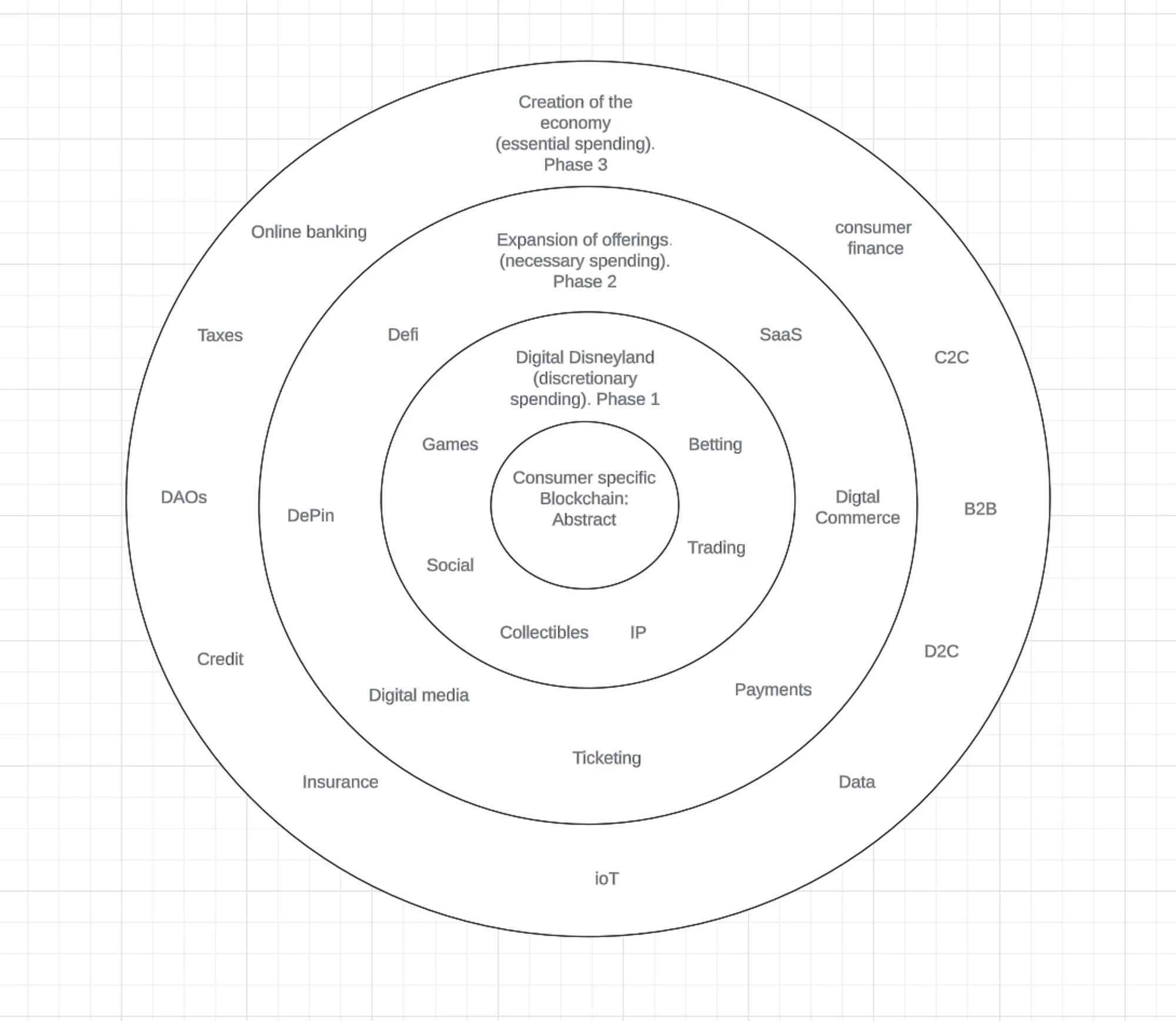
I believe blockchains are like cities, and like all cities, demand for them is driven by the attractions and activities they offer. For this reason, I believe that the breakthrough for consumer adoption will come from teams hyper-focusing on curating premier attractions within their city. Once you have an attraction that is driving people into your ecosystem, you can then build the city around that attraction. -Luca Netz
Luca describes Abstract’s path to success in 4 steps:
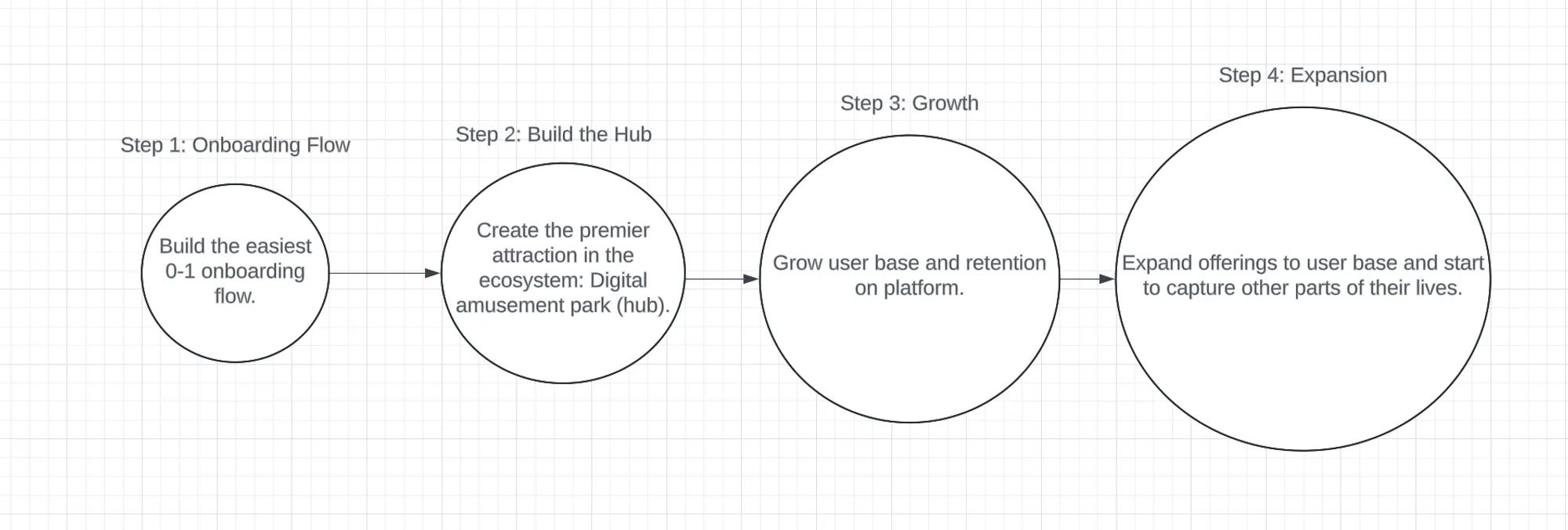
Right now they might be somewhere between Step 1 and 2, building their Portal, which i guess is taking the place of digital amusement park.
Competitive Landscape
Abstract is competing in the sector of consumer-oriented crypto projects. Especially those that want to abstract the blockchain away from the users.
Projects that are also dealing with chain abstraction are, for example, Arcana and Near. Still, Abstract seems really unique in its approach, especially when it comes to how to onboard new users and how to market their ecosystem.
In the future, hopefully, chain abstraction and user onboarding will become an even bigger topic also for established chains like Solana and Ethereum. Good ideas implemented by Abstract could also be implemented into them. And they already have huge communities. In the end, it really comes down to who’s quicker in building the more attractive system for the user and keeping them in it. Abstract has done a good start here.
The Team
Abstract is developed by Igloo Inc., the company behind Pudgy Penguins. In June 2024, Igloo acquired Frame. Frame is a development group known for their work in the Ethereum ecosystem and around rollups.
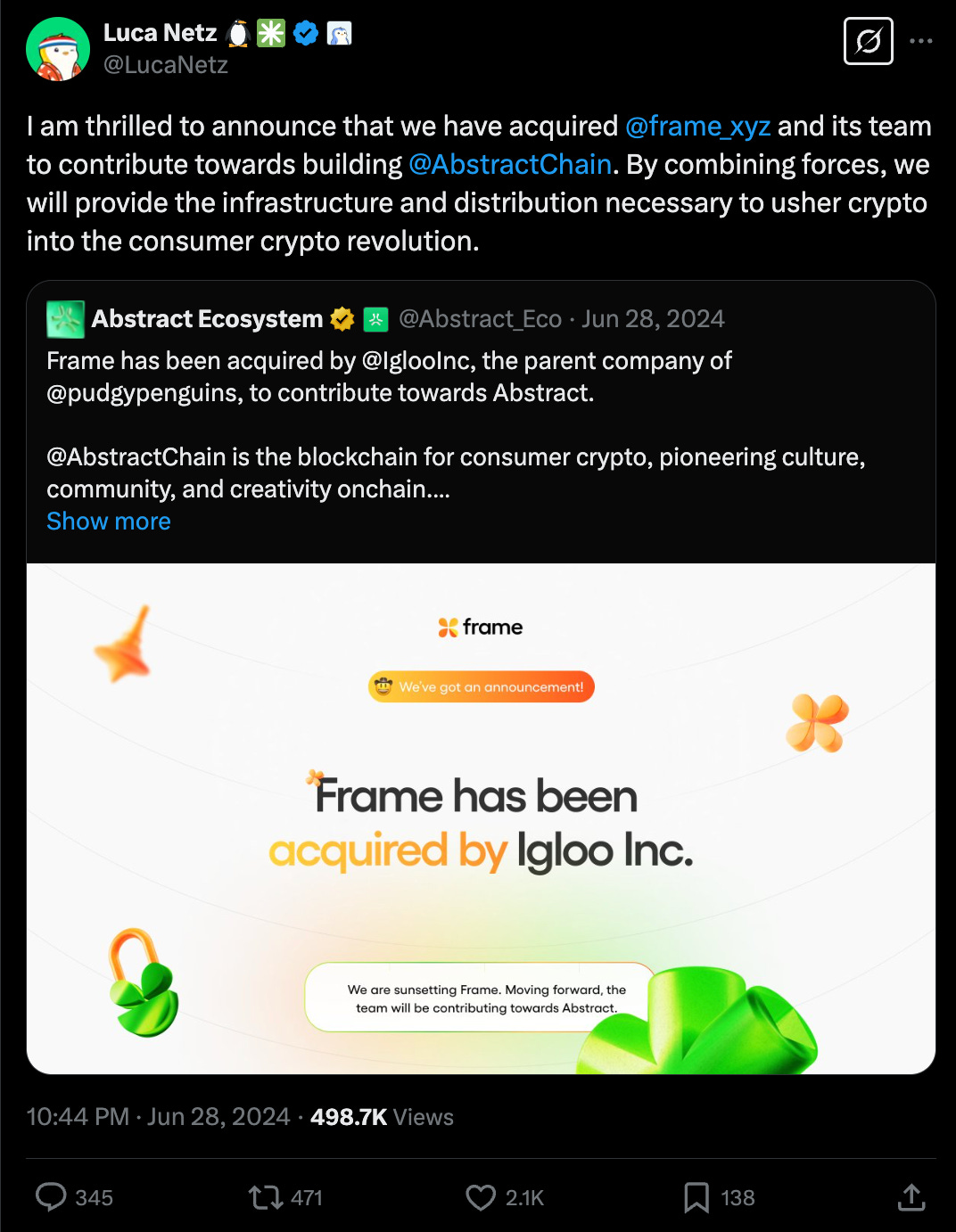
Here is a quick description of the 3 core founders of Abstract:
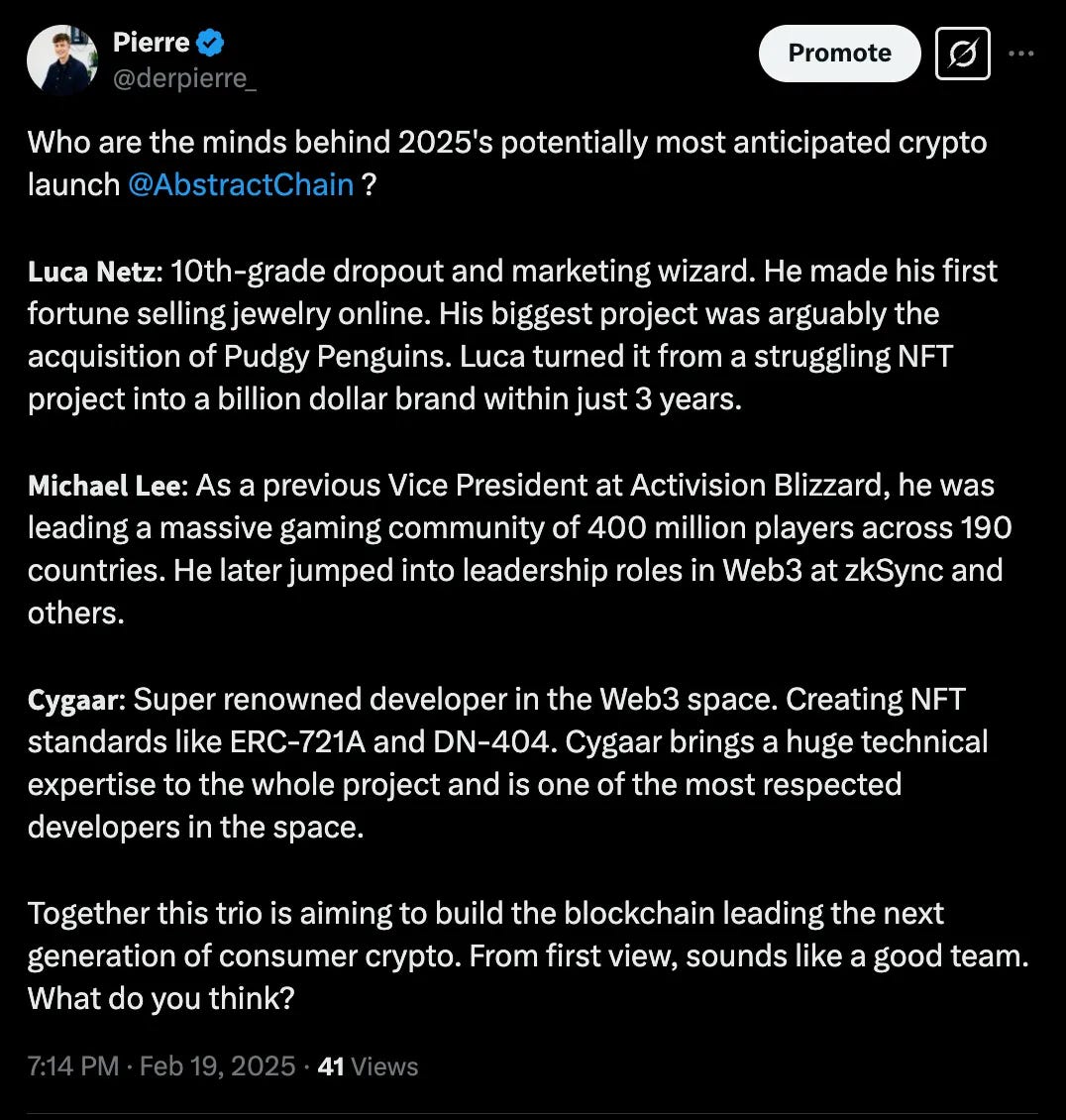
Wild guess: Not a lot of VCs would decline a team like this..
As maybe visible in the post, I find it a really interesting team. For me, it just seems like a great composition where everybody has his area of expertise. Let’s see how this plays out in the long run.
Community & Ecosystem
Abstract has an impressive Social Media growth. With over 685k followers on X, they are already really close to established Layer 2 solutions like Optimism.
Looking at the growth of their own services like the streaming platform, over 6000 streams have been hosted there already.
30 days after the launch of the Mainnet, Abstract has a total of 1.2 million created wallets and 18 million transactions.
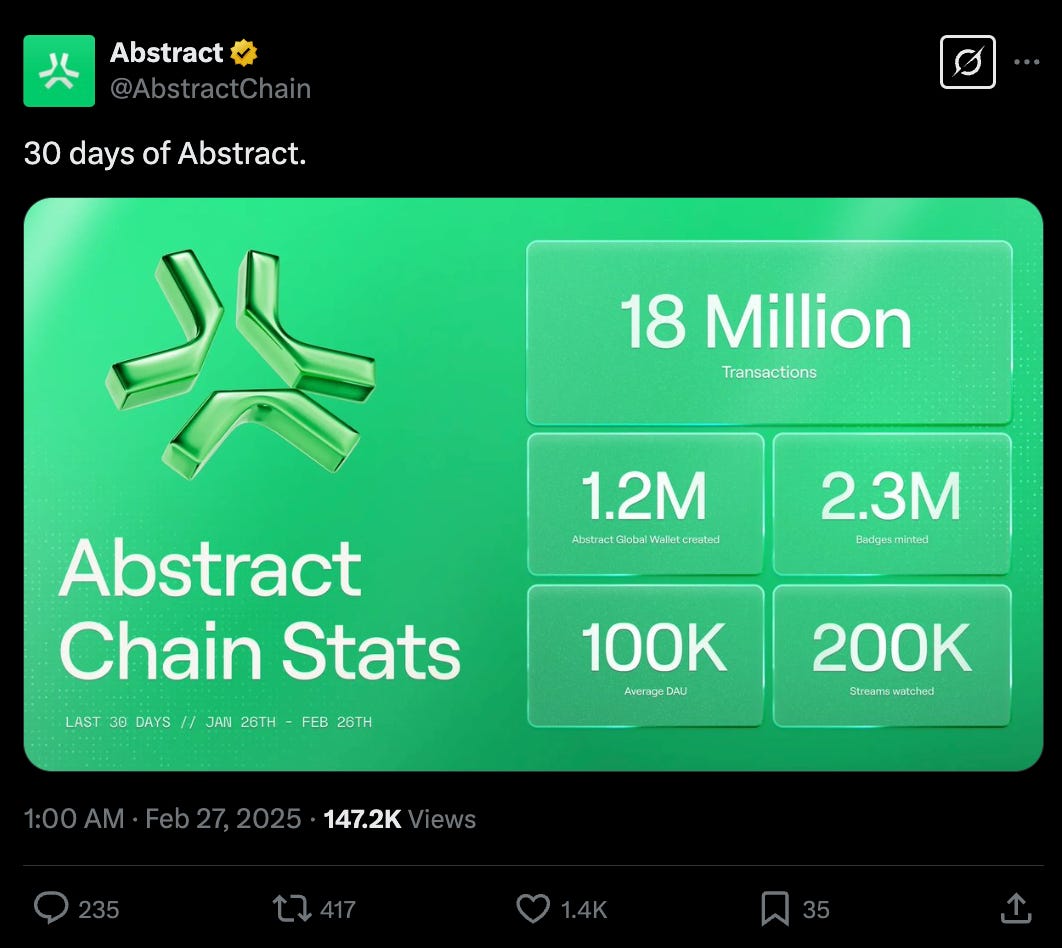
Abstract has recently posted an ecosystem map, with some of its biggest projects starting on it. The ecosystem is as expected, really centered around entertainment and fun.
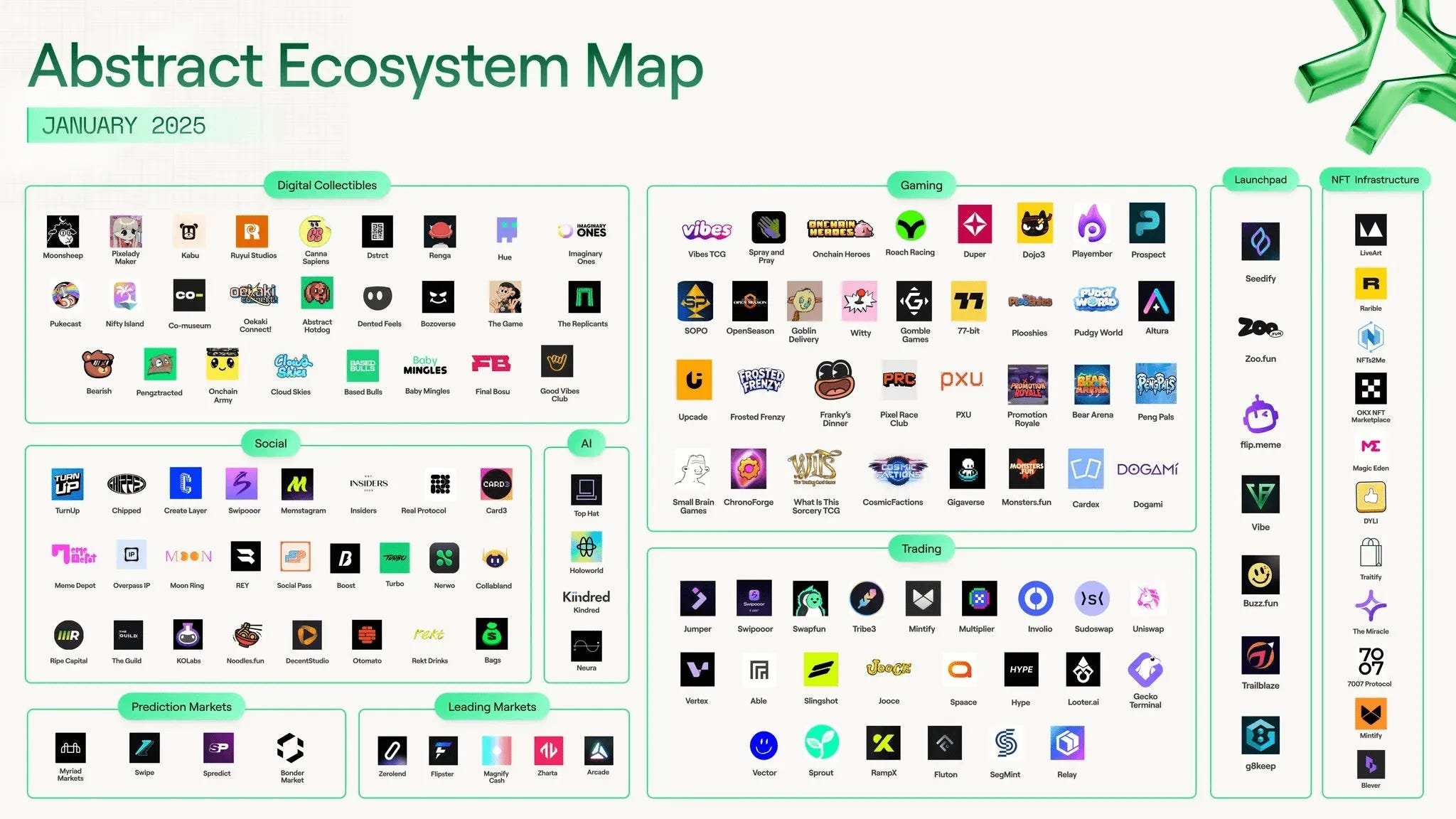
Some of the biggest projects:
DOGAMÍ: A dog-themed web3 entertainment brand mixing NFTs, gaming, and family-friendly products. Raised $14 million.
Freee: A no-code, multi-chain platform for easy NFT minting. It rewards creators and collectors, focusing on transparency.
Moonsheep: Introduces the ERC-404 token standard, merging fungible and non-fungible tokens for new uses.
Multiplier: An on-chain app for meme coins and microcaps. Offers gamified trading, token rewards, and content monetization.
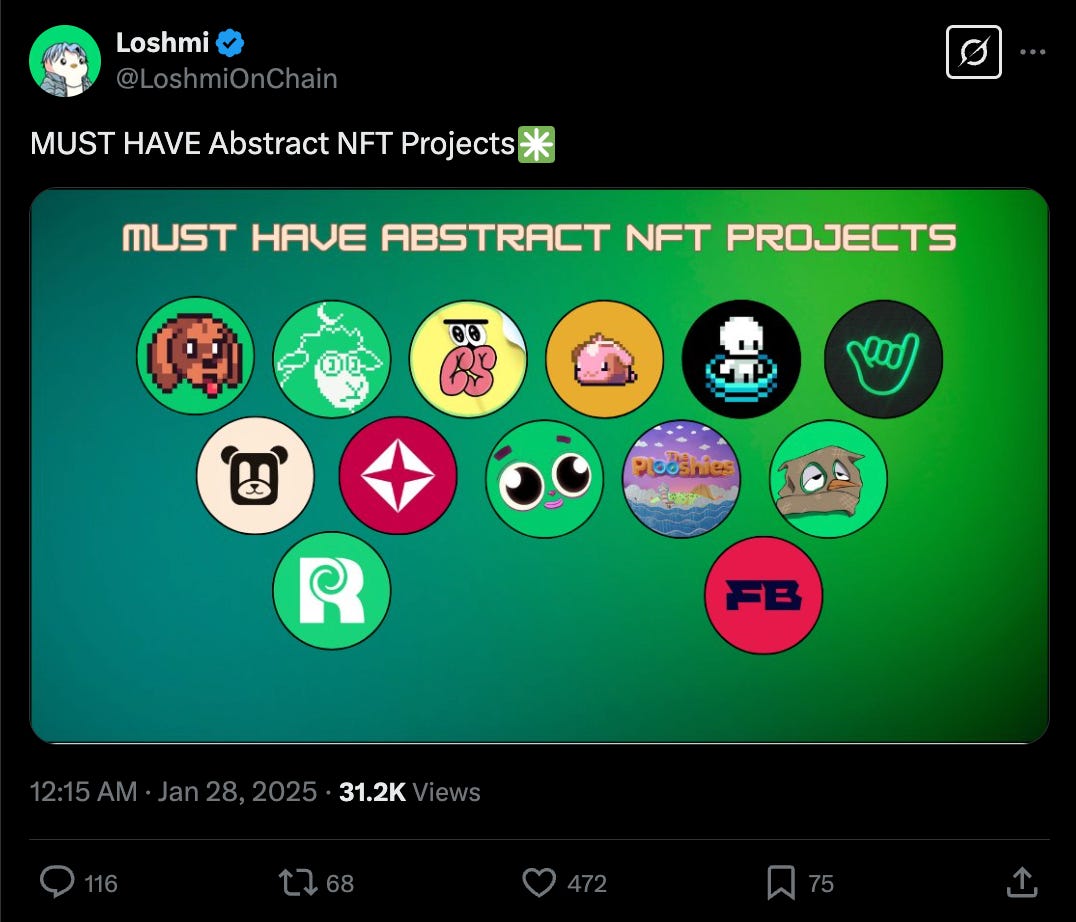
A nice overview of the NFT landscape on Abstract can be found here by @LoshmiOnChain (recommend to follow if interested in Abstract)
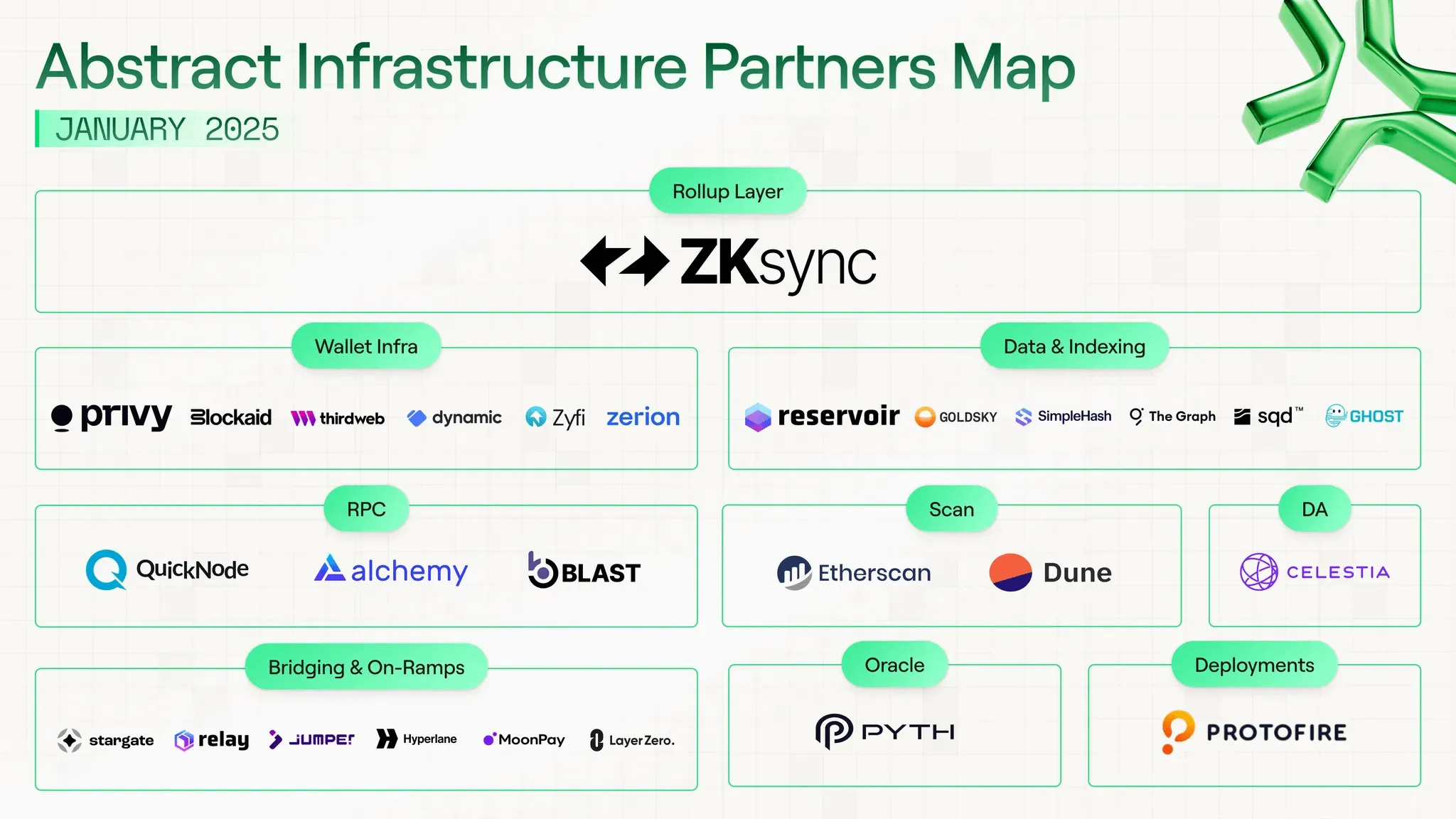
Looking at the infrastructure landscape, Abstract has secured a lot of powerful partners like QuickNode, Dune Analytics, and Pyth as an oracle.
Abstract Token
The Abstract Chain will be powered by its own token, but nobody knows the ticker or details yet. Since its Mainnet launch, people have been using the Abstract XP system. It gives XP points for using apps, making transactions, and staying active in the Abstract world. These XP points are expected to turn into some of the new tokens later.
Conclusion
Abstract has a unique approach in onboarding the next generation of crypto users. Definitely one that differs from other ones. In my opinion, a really interesting one. Furthermore, Abstract has a really strong founding team with diverse expertise areas. Also, the technology they use and how they combined it in one product seems like a step in the right direction.
A step in the right direction is how I would generally describe Abstract. No matter if it will succeed, it will definitely bring attention to a more user-centric approach in crypto.
If Abstract continues to do a great job in this space and other protocols continue sleeping on abstraction, I can see Abstract doing really well.
Reach out to me if you have any additional updates or comments on this article. I want to make this newsletter the number one resource for crypto project analysis and always keep the articles up-to-date!
Good Sunday.